Apartment hostage crisis and the bank robber’s disappearance
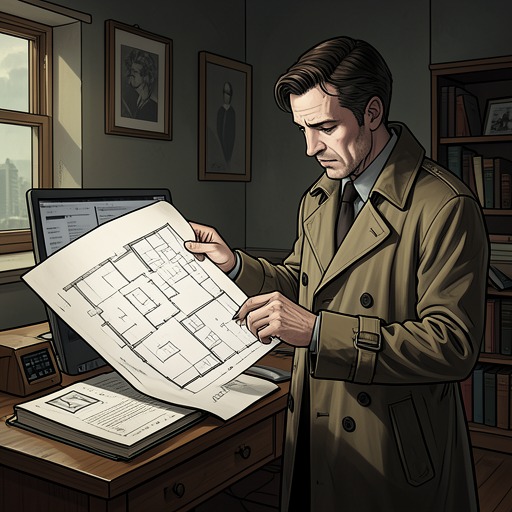
Anxious PeopleThe apartment hostage crisis begins as an escape from a failed bank holdup and ends with eight people free but the Bank robber missing. Its crucial turn is not simply that a fleeing person enters an apartment viewing: after the hostages leave, a gunshot is heard, yet police find the apartment empty. The gap between those events makes the crisis both a public spectacle and a mystery that none of its hostages can resolve.
Causes and Stakes
The immediate cause is a failed attempt to rob a cashless bank. With police arriving, the Bank robber runs across the street and through the first open door, which leads to a stairwell with no exit except upward. At the top, an apartment is open for viewing and prospective buyers are inside. The Bank robber enters, exhausted and carrying a pistol; what began as flight becomes a hostage crisis almost by accident.
The choice to flee is set against material pressures rather than treated as an isolated criminal impulse. After a separation, the Bank robber has no job or savings and no secure place to live. Buying an apartment is beyond reach, while renting requires a deposit of four months’ rent. The lending rules expose the bind: credit is unavailable to someone without money, and a rental deposit is also beyond someone with no income. The apartment viewing brings this housing insecurity directly into the crisis, placing people seeking a home and a person without one in the same space.
The novel widens that pressure into a critique of financial risk and responsibility. In a separate account of the Man on the bridge, savings placed in supposedly secure investments turn into debt when the market crashes; a bank then describes the customer’s exposure as moral hazard. That history is not the direct cause of the hostage-taking, but it echoes the Bank robber’s circumstances: institutions can describe risk in abstract terms while its consequences fall on people who have few alternatives. During the hostage drama, Zara likewise argues that people made the economic system too powerful and forgot how greedy they could be. The crisis thus links private desperation to a housing and credit system that treats shelter as something to finance, secure, and trade.
From Viewing to Hostage Crisis
The apartment contains seven prospective buyers and one real estate agent. Police surround the building; reporters arrive, and the incident reaches television news. For several hours the people inside remain hostages, while the immediate stakes shift from arrest and escape to getting everyone out safely. The eight hostages are eventually released. The public sequence appears to have reached its conclusion when the people leave the apartment, but the police response that follows reveals how little that apparent ending explains.
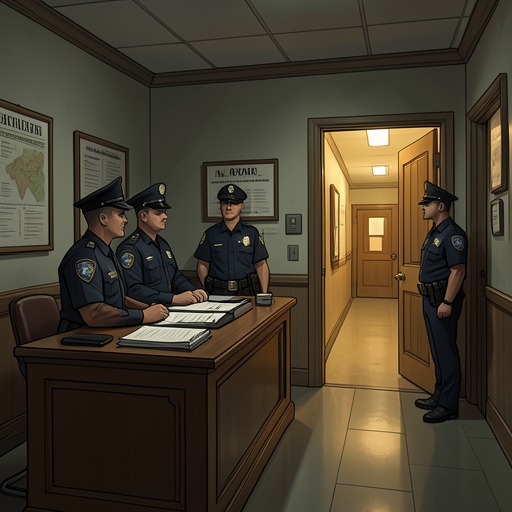
The crisis also brings the local police response under pressure. Jack has never handled a hostage drama and doubts what his active-listening course can offer in the moment. He needs a way to establish contact, while anticipating that senior officers may ask why the town has not called Stockholm for help. Rather than immediately send Jim up with pizzas, Jack tries to find another way to understand what is happening. He proposes entering a building across the street to look toward the stairwell, mindful that the suspected bomb may not be a bomb but unwilling to make his father test that assumption for him. The effort shows a young officer trying to make a local decision while the consequences of being wrong remain serious.
The advice available to the police is conventional and limited: avoid negative language, find common ground, and learn the hostage taker’s motivation. Jim presents these as familiar techniques, then admits that jokingly describing them does not mean they actually got anyone out. That exchange undercuts the idea that a course or a list of steps can make a crisis predictable. Jack still has to find a starting point, and the people inside remain more than a negotiation problem: their release depends on what happens between them and the person holding them.
Release, Gunshot, and Disappearance
The public account says that the Bank robber has to give up and that all eight hostages are released. A few minutes later, police storm the apartment and find it empty. No one knows where the Bank robber has gone. The empty rooms overturn the expected ending: the hostages are out, but the police have neither the person they came to arrest nor an explanation for the disappearance.
A later account clarifies why the interval cannot be reconstructed from the hostages’ testimony. They have already been placed in cars and are being driven to the Local police station while officers gather in the stairwell. A special negotiator sent from Stockholm calls the Bank robber, hoping to settle the crisis peacefully; there is no answer. A single pistol shot rings out before police break into the apartment. The hostages, already away from the scene, know none of this. The account supplies a disturbing last sound, not an eyewitness explanation of what happened or where the Bank robber went.
Jim’s conduct further complicates the boundary between police duty and personal assistance. The Bank robber asks why a police officer is doing this for her, making clear that she sees his help as something his role should forbid. Jim answers by recalling his late wife’s image of planting an apple tree even if the world were going to ruin the next day. The gesture does not erase the legal and moral conflict, but it places his decision within a belief in acting for another person even when the outcome cannot be guaranteed.
Aftermath and Wider Significance
The apartment continues to connect people and consequences after the hostage-taking. Zara’s presence at the viewing is bound to her earlier encounter with Nadia: she once found Nadia’s wallet and identification after Nadia had climbed onto the bridge railing and been rescued by a boy. Zara has watched Nadia’s life from a distance ever since. The hostage crisis brings the two women into the same chain of events, while showing how the apparent subject of a police investigation may conceal older, private connections.
The viewing also exposes the market logic embedded in the setting. The real estate agent reveals that an unlisted apartment opposite is available, but has not yet been advertised because selling two apartments at once could lower the price of both. The unit is empty except for a juicer; its owners are separating, and its color makes it unattractive to them. Against the Bank robber’s inability to afford a deposit or a home, the apartment is presented simultaneously as shelter, commodity, and asset whose sale can be timed for a better return.
As a narrative event, the crisis is built around a reversal of visibility. Police, reporters, and television turn the apartment into a public scene, yet the decisive interval occurs after the hostages have left and outside their knowledge. The release seems to close the emergency; the empty apartment reopens it. By leaving the Bank robber’s disappearance unresolved from the hostages’ point of view, the episode shifts attention from the spectacle of a holdup to the unseen choices, vulnerabilities, and acts of help that continue beyond it.